

EFEU - Project Activities and Deliverables
The EFEU project brought together universities across Europe to advance sustainability in higher education. By developing tools to measure carbon footprints, creating new teaching modules, and raising awareness among students and staff, EFEU supported universities on their path to carbon neutrality. On this website, we showcase the project’s activities and deliverables.
Work Package 2 – State of the Art Analysis: Universities on their Way to Emission Neutrality
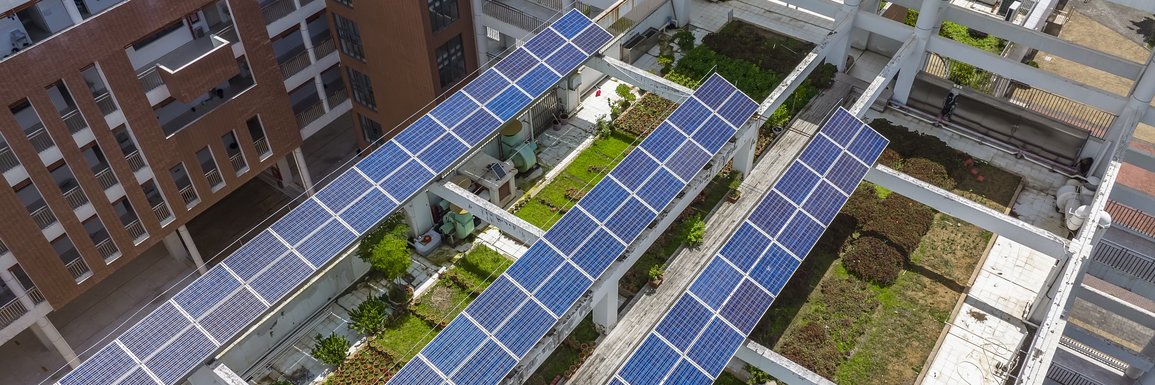
As part of the Erasmus+ project Emission Free European Universities (EFEU), Work Package 2 (WP2), led by Metropolia University of Applied Sciences (Finland), examined how universities can advance towards emission neutrality and strengthen sustainability competences in engineering education.
WP2 analysed the carbon footprint and sustainability awareness of partner universities in Finland, Germany, France, and Portugal. The partners developed two innovative, open-access tools: the EFEU Carbon Footprint Calculator, enabling universities to measure, compare, and reduce campus-related emissions, and the EFEU Sustainability Awareness Index, a scientifically grounded framework for assessing students’ and staff’s sustainability knowledge, attitudes, and behaviour.
The results offer valuable insights into the environmental impact and awareness levels within higher education institutions, helping universities identify key emission sources, monitor progress, and integrate sustainability into teaching and campus operations.
The outcomes of WP2 form the analytical foundation for curriculum innovations (WP3) and student engagement activities (WP5) and contribute directly to DHBW Stuttgart’s sustainability strategy and climate goals.
- Report: EFEU_WP2_Act_2.1-2.2_Carbon_Footprint_Calculator.pdf
- Excel File (CF Calculator): EFEU_WP2_Act_2.1_Carbon Footprint Calculator_1.3.xlsx
- Report: EFEU_WP2_Act_2.3a_Sustainability_Awareness_Report.pdf
- Report: EFEU_WP2_Act_2.3b_Sustainability_Awareness_Index.pdf
- Excel File (EFEU SAX Tool): EFEU_WP2_Act_2.3b_SAX Analysis Tool.xlsx
Work Package 3 – Curriculum and Module Development: From Teaching and Learning to Emission Neutrality

The Erasmus+ project Emission Free European Universities (EFEU) supports European higher education institutions in reducing their carbon footprint and strengthening sustainability competences in engineering education. Within this framework, Work Package 3 (WP3), led by the Université Polytechnique Hauts-de-France (UPHF) and coordinated by DHBW Stuttgart, focused on integrating sustainability and emission-reduction principles into higher education curricula.
WP3 developed and shared sustainability-oriented teaching materials, digital modules, and blended learning formats across the four partner universities. In a collaborative process, the consortium co-created 11 new disciplinary teaching units on topics such as sustainable design, circular economy, life cycle assessment, and ESG compliance, and retrofitted 12 existing courses to embed sustainability and decarbonisation content.
Major achievements include the EFEU Blended Intensive Programme (BIP) “Decarbonising Industry”, a challenge-based learning format co-developed with industrial partners; the adoption of the Climate Fresk as an interactive tool for experiential climate education; and the creation of an online MOOC on environmental and social challenges, enabling flexible access to sustainability learning.
By equipping engineering students with competencies for sustainable transformation, WP3 supports DHBW’s strategic goal of climate-neutral higher education and contributes to the Erasmus+ priorities of innovation, digitalisation, and sustainability across Europe.
- Single Report (Activities 3.1/3.2/3.3): EFEU_WP3_Curriculum and module development.pdf
- Reflective Journal: EFEU_WP3_Act_3.1_Reflective_Journal.pdf
- PDF "E-Book" (Activity 3.3a): EFEU_WP3_Act_3.3b_E-Book.pdf
- Power Point "E-Book" (Activity 3.3a):
- Excel File (Activity 3.3b): EFEU_WP3_Act_3.3b_Curriculum Analysis Tool Version 4.0 VF.xlsx
Work Package 4 – University Practices Assessment and Continuous Improvement: Keeping on Track to Emission Neutrality
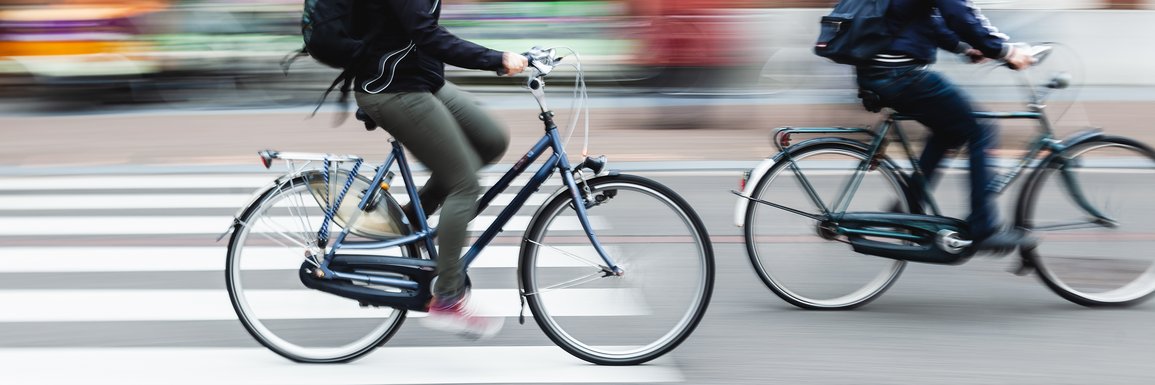
Work Package 4 (WP4), led by the Polytechnic of Leiria (Portugal), explored how universities can make their daily operations and academic activities more sustainable. Within the Erasmus+ project Emission Free European Universities (EFEU), WP4 focused on assessing the carbon footprint of higher education practices—especially commuting and teaching—and identifying effective pathways toward climate neutrality.
A comprehensive mobility survey with 855 respondents across four partner universities (Germany, Portugal, France, Finland) provided new insights into how teaching formats and mobility habits affect CO₂ emissions. Based on these data, the project developed the EFEU CO₂e Computation Model, an open-access online tool that calculates the emissions of daily travel and visualises their impact. Complementing this, the Carbon Footprint of Teaching Calculator compares in-person, hybrid, and online teaching modes, helping universities plan more sustainable academic schedules.
To foster dialogue and community engagement, two Sustainable Mobility Workshops were organised in collaboration with the Municipality of Leiria, leading to tangible policy outcomes such as improved cycling infrastructure and an urban mobility app. Finally, the Good Practice Guide on Sustainable Mobility compiled innovative solutions from partner universities to inspire further action.
Through data-driven analysis, co-creation, and knowledge transfer, WP4 demonstrated how universities can continuously monitor, reduce, and improve their environmental performance—advancing DHBW’s and Europe’s shared commitment to emission-free higher education.
- Computation Model: https://efeu.cdrsp.ipleiria.pt/
- Report: EFEU_WP4_PartA_Act4.1_Mobility_Survey.pdf
- Excel File (Carbon Footprint in Higher Education): EFEU_WP4_PartC_Act4.3_Carbon Footprint of Teaching_Calculator.xlsx
- Report: EFEU_WP4_PartB_Act4.2_Development and Testing CO2 Computation Model.pdf
- Report: EFEU_WP4_PartC_Act4.3_Carbon Footprint of Teaching.pdf
- Report: EFEU_WP4_PartD_Act4.4a_Sustainable Mobility Workshops.pdf
- Report: EFEU_WP4_PartE_Act4.4b_Good Sustainable Mobility Practices Guide.pdf
Work Package 5 – Student and Staff Involvement: Taking Students and Staff to Universities’ Emission Neutrality
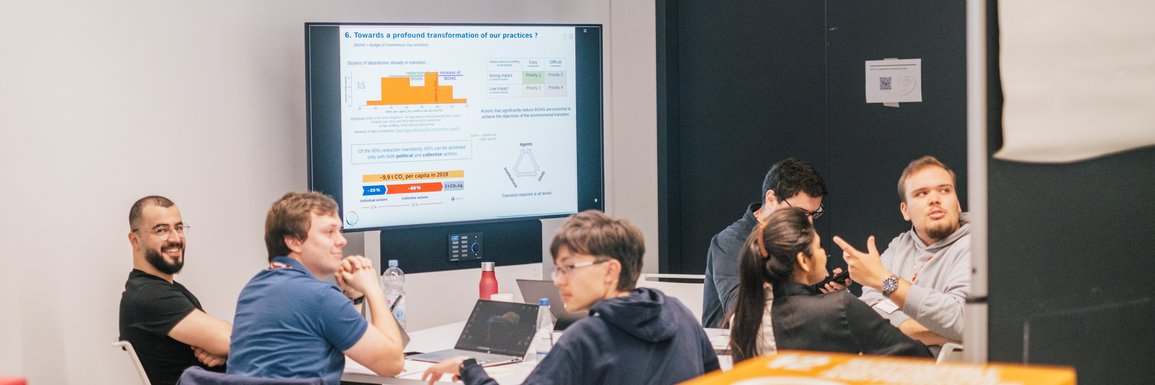
Within the Erasmus+ project Emission Free European Universities (EFEU), Work Package 5 (WP5) – co-led by Université Polytechnique Hauts-de-France and DHBW Stuttgart – engaged students and staff in shaping the path toward climate-neutral higher education. WP5 translated the EFEU vision of sustainable universities into action-oriented learning that combines digitalisation, collaboration, and creativity.
Three flagship results exemplify this approach.
Four digital teaching units integrate sustainability into engineering curricula, providing open-access resources on topics such as corporate sustainability, e-waste recycling, product environmental footprints, and life-cycle assessment.
The EFEU Serious Game, an interactive role-playing simulation co-created by the partner universities, enables participants to experience real-world decision-making for reducing carbon emissions.
Finally, the EFEU Summer School 2025 in Stuttgart brought together students and lecturers from across Europe for five intensive days of challenge-based learning, design thinking, and hands-on workshops.
Through these activities, WP5 fostered sustainability competencies, strengthened cross-cultural exchange, and empowered future engineers and university staff as active change agents in Europe’s transition toward emission-free campuses.
- Single Report (Activities 5.1/5.2/5.3): EFEU_WP5_Act_5.2_EFEU_Serious_Game_Book_of_Characters.pdf
- Single Report (Activitiy 5.4): EFEU_WP5_Act_5.4_Suitability and acceptance of VR_AR formats in teaching sustainability.pdf
- Report: EFEU_WP5_Student and Staff involvement.pdf
- Digital Lecture UPHF
- 0 presentation Recycling Lecture UPHF WP3.docx
- 0 presentation Recycling Lecture UPHF WP3.pdf
- 1.0 Assignment Recycling Lecture UPHF WP3 Q.docx
- 1.0 Assignment Recycling Lecture UPHF WP3 Q.pdf
- 1.1 Assignment Recycling Lecture UPHF WP3 Q&A.docx
- 1.1 Assignment Recycling Lecture UPHF WP3 Q&A.pdf
- Online Digital Lecture EFEU-El Hadj Dogheche UPHF 2025_1.pptx
- Online Digital Lecture EFEU-El Hadj Dogheche UPHF 2025_2.pptx
- Online Digital Lecture EFEU-El Hadj Dogheche UPHF 2025_3.pptx
- Online Digital Lecture EFEU-El Hadj Dogheche UPHF 2025_4.pptx
- Digital Lecture Recycling UPHF Dogheche.mp4
- Digital Lecture Metropolia
- Digital Lecture IPL
- 0. EFEU_Introduction Class Environmental footprint of a Manufactured Product.docx
- 0. EFEU_Introduction Class Environmental footprint of a Manufactured Product.pdf
- 1. Class EFEU_Environmental footprint of a Manufactured Product_VF.pptx
- 1. Class EFEU_Environmental footprint of a Manufactured Product_video.mp4
- 2. Post-class activities.docx
- 2. Post-class activities.pdf
- 2.1 EFEU_Handout Class Environmental footprint of a Manufactured Product.docx
- 2.1 EFEU_Handout Class Environmental footprint of a Manufactured Product.pdf
- 2.2 EFEU_Activity Worksheet Class Environmental footprint of a Manufactured Product.docx
- 2.2 EFEU_Activity Worksheet Class Environmental footprint of a Manufactured Product.pdf
- 2.3 EFEU online quizz Class Environmental footprint of a Manufactured Product.docx
- 2.3 EFEU online quizz Class Environmental footprint of a Manufactured Product.pdf
- 2.4 slides EFEU_Environmental footprint of a Manufactured Product_VF.pdf
- Marcelo Gaspar Template Online Class Introduction to Sustainability Principles_Marcelo (1).docx
- Digital Lecture DHBW Stuttgart
- DHBWxEFEU_DTU_ESG_Unit 1_Fundamentals.pptx
- DHBWxEFEU_DTU_ESG_Unit 2_Sustainability Reporting.pptx
- DHBWxEFEU_DTU_ESG_Unit 3_Corporate Practice.pptx
- DHBWxEFEU_DTU_ESG_Unit 4_Best Practices.pptx
- Simple Show Videos:
- Unit 1: Historical development of ESG
- Unit 1: Understanding of the term and relevance of the topic
- Unit 1: ESG factors
- Unit 1: Regulatory framework of the EU
- Unit1: ESG as a management and evaluation system
- Unit 2: Overview of the CSRD
- Unit 2: scope & implementation
- Unit 2: reporting & requirements
- Unit 2: Summary
- Unit 3: from CSRD compliance to ESG action
- Unit 3: Building an ESG strategy
- Unit 3: identifying and managing ESG risks
- Unit 3: implementing ESG across the business
- Unit 3: communicating ESG clearly and effectively
- Podcasts:
EFEU Conference 2025

On 25 June 2025, DHBW Stuttgart hosted the international EFEU Conference 2025, held online from 10:00 to 13:00 CET. As part of the Erasmus+ project EFEU, the conference presented key results of the project.
Under the theme “Universities and Students on Their Way to Emission Neutrality,” the conference highlights pioneering initiatives and research fostering sustainable transformation across campuses and curricula.
In the first session, the partner universities presented their commitment to achieving climate neutrality by 2030, showcasing its energy and climate protection strategy, mobility projects, and Green Office initiatives. The second session focused on strengthening students’ sustainability competencies through tools like the EFEU SAX, innovative teaching formats, gamification, and the EFEU Summer School 2025. The final session spotlights young researchers advancing sustainable food production systems.
The EFEU Conference 2025 provided a collaborative platform for universities and students to exchange knowledge, share best practices, and inspire actionable solutions for a more sustainable academic and industrial future.
- Agenda_EFEU Conference_2025.pdf
- DHBW EFEU Insights 25-06-2025_Pahlenberg.pdf
- EFEU Conference 2025 Welcome_Opening_slide.pdf
- EFEU Conference Announcement video footprint.mp4
- EFEU Online Conference Invitation_Print.pdf
- IPL EFEU Conference 2025-06-25_Santos.pdf
- IPL EFEU Conference2025-06-25_Gaspar_Mobility.pdf
- IPL EFEU Conference2025-06-25_Ruben.pdf
- UPHF EFEU Conference 2025-06-25_Abba.pdf
- UPHF EFEU Conference 2025-06-25.pdf
- EFEU Conference Videos:
- https://video.dhbw.de/videos/efeu_conference_2025_video4_sustainable_food_production_systemsmp4/
- https://video.dhbw.de/videos/efeu_conference_2025_video3_summer_schoolmp4/
- https://video.dhbw.de/videos/efeu_conference_2025_video2_new_contents_formats_and_methodsmp4/
- https://video.dhbw.de/videos/efeu_conference_2025_video1_emission_free_european_universitiesmp4/
- https://video.dhbw.de/videos/efeu_conference_video5_carbon_footprintmp4/
- https://video.dhbw.de/videos/efeu_conference_video4_universities_emission_neutralitymp4/
- https://video.dhbw.de/videos/efeu_conference_video3_yesterday_today_tomorrowmp4/
- https://video.dhbw.de/videos/efeu_conference_video2_sustainabilitymp4/
- https://video.dhbw.de/videos/efeu_conference_video1_emission_freemp4/